
Lotus365 Exchange
The online betting industry has changed significantly over time. Earlier, most platforms followed a traditional sportsbook model, where the platform itself acted as the bookmaker and set the odds. Today, newer systems like the Lotus365 exchange have introduced a different approach called peer-to-peer (P2P) betting, where users can bet against each other instead of the platform.
Platforms like Lotus365 Win combine this modern exchange system with features designed for local users, especially in regions like South Asia. This guide explains how these models work, the basics of back and lay betting, how the Lotus365 system operates, and the impact of new regulations like the Online Gaming Act 2025 in a simple and easy-to-understand way.

Betting Models Explained: Exchange vs Traditional Sportsbook
Understanding how modern betting works starts with knowing the difference between peer-to-peer exchanges and traditional sportsbooks. The main difference lies in who you are betting against and how the odds are created.
What Is a Traditional Sportsbook?
In a traditional sportsbook, the platform itself acts as the bookmaker (the “house”). This means:
- The platform sets fixed odds
- You always bet against the house
- The platform takes on the financial risk
To ensure profit, sportsbooks include a margin called the “vig” (vigorish) in their odds.
How the “Vig” Works
The vig is a built-in profit margin that is added to the odds. For example:
- Fair odds for a 50/50 event = 2.00
- Sportsbook odds = 1.91
This small difference ensures the platform makes money regardless of the result. Over time, this reduces the total payout for users.
Advantages & Limitations of Sportsbooks
Advantages:
- Guaranteed bet acceptance (high liquidity)
- Simple and beginner-friendly
- Fixed odds for easy understanding
Limitations:
- Lower payouts due to vig
- Odds controlled by the platform
- Winning users may face account limits
What Is a Betting Exchange (Like Lotus365 Exchange)?
A betting exchange works differently. Instead of betting against the platform:
- You bet against other users
- The platform only acts as a middleman
- Odds are decided by the market (users)
This system is called peer-to-peer (P2P) betting.
Why Exchange Betting Is Different
- No fixed odds → better pricing
- Higher potential returns
- More transparency in betting markets
Instead of earning through margins, the platform earns a small commission on winnings.

Traditional Sportsbook vs Lotus365 Exchange
| Feature | Traditional Sportsbook | Lotus365 Exchange (P2P Model) |
|---|---|---|
| Who You Bet Against | The platform (house) | Other users (peer-to-peer) |
| Odds Creation | Fixed by bookmaker | Dynamic, based on market demand |
| Platform Earnings | Built-in margin (vig) | Small commission (2%–5% on winnings) |
| Risk Factor | Platform takes financial risk | No risk for platform (only facilitator) |
| Betting Options | Only “Back” (bet on outcome) | Back & Lay (bet for or against) |
| Liquidity Source | Platform funds | Active users in the market |
| Payout Value | Lower due to margin | Better odds, higher returns |
| Account Restrictions | Possible for winning users | Usually no limits for skilled bettors |
| Transparency | Limited (controlled odds) | High (market-driven pricing) |
Technological Infrastructure of Lotus365 Platform
The Lotus365 ecosystem is built using a multi-platform architecture, where different portals are designed for specific user needs. Understanding the difference between Lotus365 Exchange and Lotus365 Win is important for smooth navigation and better usage.
Lotus365 Exchange vs Lotus365 Win
Although both platforms are part of the same ecosystem, they serve different purposes.
Lotus365 Exchange
- Core peer-to-peer (P2P) betting marketplace
- Supports Back & Lay betting
- Ideal for advanced users and traders
Lotus365 Win
- Optimized for fast login and mobile users
- Simplified interface for quick access
- Best for live betting (in-play markets)d
Lotus365 Win is generally preferred for speed, while the Exchange is used for advanced betting strategies.
Login System & Security Features
Access to Lotus365 follows a structured login process designed to balance speed and security.
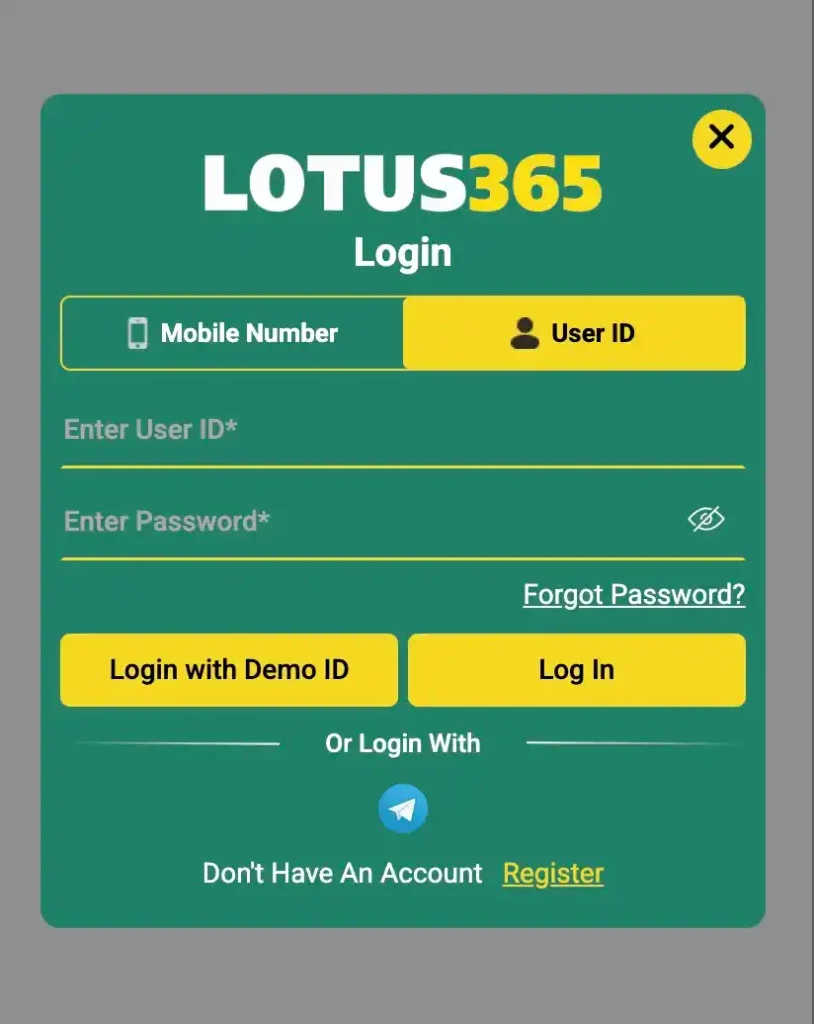
Key Security Measures
- Minimum 6-character alphanumeric password
- Combination of uppercase, lowercase, and symbols
- Optional Two-Factor Authentication (2FA)
- OTP verification via SMS or email
Login Type Comparison
| Feature | Standard Login | Lotus365 Win / VIP Login |
|---|---|---|
| Verification Time | 24–48 hours | Instant / Priority |
| Security Level | Password-based | Password + 2FA |
| Account Types | Demo, Client, Master | Client, VIP, Super Master |
| Wallet Access | Unified wallet | Unified + faster servers |
| Access Method | Browser / APK | Optimized mobile interface |
Mobile App (APK) System
Since the app is not available on Play Store, Lotus365 uses APK-based distribution.
App Highlights
- Lightweight (~7.34 MB)
- Works on Android 5.0+
- Fast performance during live betting
- Push notifications for updates
App Specifications
| Feature | Details |
|---|---|
| App Size | ~7.34 MB |
| Compatibility | Android 5.0+ |
| Versions | 1.1 (Standard), 16.0 (Advanced) |
| Source | Official website / verified APK |
| Updates | Manual download required |
Advanced Betting Mechanics (Exchange System)
The Lotus365 Exchange offers advanced betting features not available in traditional sportsbooks.
Back vs Lay Betting
Back Bet (Support Outcome)
- You bet that an event will happen
- Example: Bet ₹100 at odds 2.50 → Profit ₹150
Lay Bet (Oppose Outcome)
- You bet that an event will NOT happen
- You act like a bookmaker
Key Formulas
Liability (Lay Bet):Liability = Stake × (Odds − 1)
Profit (Back Bet):(Stake × Odds) − Stake
Risk Comparison
| Bet Type | Strategy | Profit Condition | Risk |
|---|---|---|---|
| Back | Support outcome | Event happens | Stake |
| Lay | Oppose outcome | Event does NOT happen | Liability |
Lotus365 Fancy Bets (Cricket Markets)
Fancy bets provide detailed, event-based betting options, especially popular in cricket.
Types of Fancy Bets
Session Betting
- Predict runs in a fixed over-period (e.g., powerplay)
Player Performance
- Runs scored, wickets taken
Match Events
- Number of sixes
- Next wicket type
- Balls faced
Most fancy bets are settled on a Yes/No basis
Exchange Economics & Commission Model
Lotus365 Exchange operates on a transparent commission system, unlike sportsbooks.
Commission Structure
- Typically 2% to 5% on net winnings
- No hidden margins in odds
Global Comparison
| Platform | Commission | Efficiency | Market Focus |
|---|---|---|---|
| Betfair | 5% | High | Global |
| Smarkets | 2% | Very High | Europe |
| Matchbook | 2% | Very High | Professionals |
| Lotus365 | 2–5% | High | South Asia |
| Betdaq | 2% | High | UK |
Importance of Market Liquidity
Liquidity determines how easily bets are matched.
High Liquidity (Best Case)
- IPL, World Cup matches
- Instant bet matching
- Minimal price difference
Low Liquidity
- Small leagues
- Delays in matching bets
- Less favorable odds
(FAQs) Lotus365 Exchange & Win
What is the main difference between Lotus365 Exchange and a sportsbook?
Lotus365 Exchange allows users to bet against each other (P2P), while sportsbooks make you bet against the platform. This usually results in better odds on exchanges.
Is Lotus365 Win the same as Lotus365 Exchange?
No, Lotus365 Win is mainly for fast login and mobile access, while the Exchange is the main platform for advanced betting like back and lay.
How does Lotus365 make money without setting odds?
Instead of adding a margin, Lotus365 charges a small commission (around 2%–5%) on net winnings.
What is Back and Lay betting in Lotus365?
Back means betting on an outcome to happen, while Lay means betting against it. This gives users more flexibility and trading opportunities.
Why do Lotus365 links keep changing?
Due to regional restrictions, the platform uses mirror links to stay accessible. These links provide the same account and wallet access.
Is it safe to use Lotus365 platforms?
You should only use official links and verify sources carefully. Avoid unknown agents or fake IDs to reduce risks.